This exercise is help to me think about the practical process of composition. Rather than using landscapes or objects, the idea is challenge the photographer by choosing a situation that involves people.
I had struggled to find a suitable situation here, as time is very limited at the moment and there aren't many public events going on. It wasn't until I drove past a car boot this morning and thought this would make an ideal opportunity to photograph people which may have the potential for an interesting photo and where situations change every second, giving me the opportunity to walk, view and wait.
Below is a record of the photographs that document life as it happens during a busy car boot in Portsmouth.
f4.0-1/800-100-60mm
Entry in the car boot
f4.0-1/800-100-55mm
Iconic ice cream vans make an appearance on sunny days
f5.6-1/400-125-250mm
Capering the moment of handing over ice cream for payment
f5.6-1/1000-100-194mm
Women views what's on offer
f5.0-1/1250-100-123mm
View of one stall and their set up to sell many smaller objects
f5.6-1/1600-100-187mm
Further exchanges
f5.6-1/2000-100-225mm
Seller waits patiently for a sale ... or almost falls asleep in the sun!
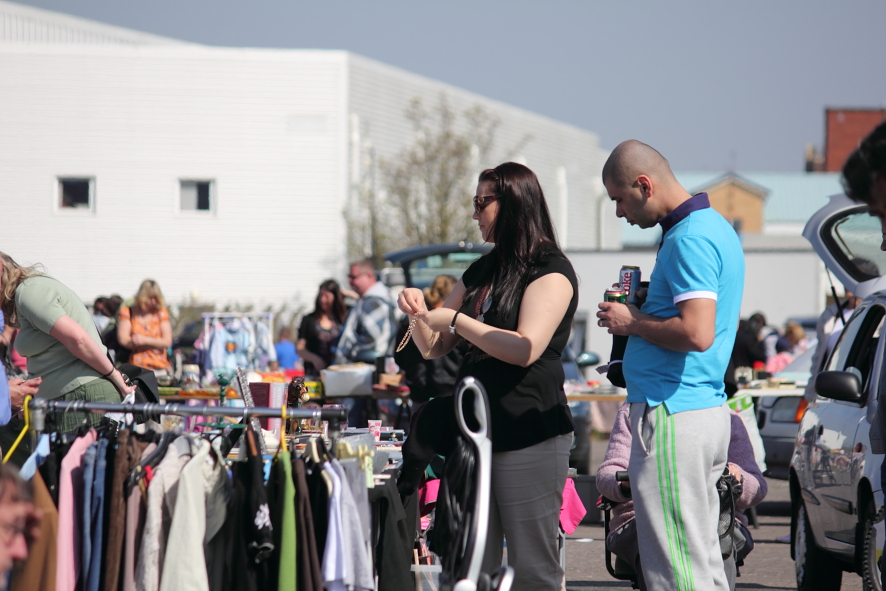
f5.6-1/800-100-163mm
Buyers browse what's on offer
f5.6-1/2000-100-154mm
A seller goes through what she left and begins to organise
f4.0-1/1000-100-55mm
Browsing the books
f4.5-1/1250-100-74mm
A man sits perched looking through the items
f5.6-1/1600-100-250mm
Another opportunity to witness a potential purchase, while the man looks over the radio
f5.6-1/640-100-250mm
Some of the items for sale where a little on the unique side
f5.0-1/640-100-135mm
More captured expression from buyers
f5.6-1/400-250-250mm
A busy stream of buyers
f5.6-1/500-100-250mm
Another exchange
f5.6-1/400-100-220mm
A man examines a fishing rod before purchase. Capturing both buyer and seller deeply engaged in conversation and technical checking
(He didn't buy in the end ... it was bent)
f5.6-1/500-100-250mm
A stall seller checks his items
f4.0-1/500-100-60mm
An unexpected find, a couple of Vespa mopeds (not for sale)
f5.0-1/320-100-135mm
Another potential buyer
f5.6-1/500-100-250mm
Sitting and examining as life goes on all around
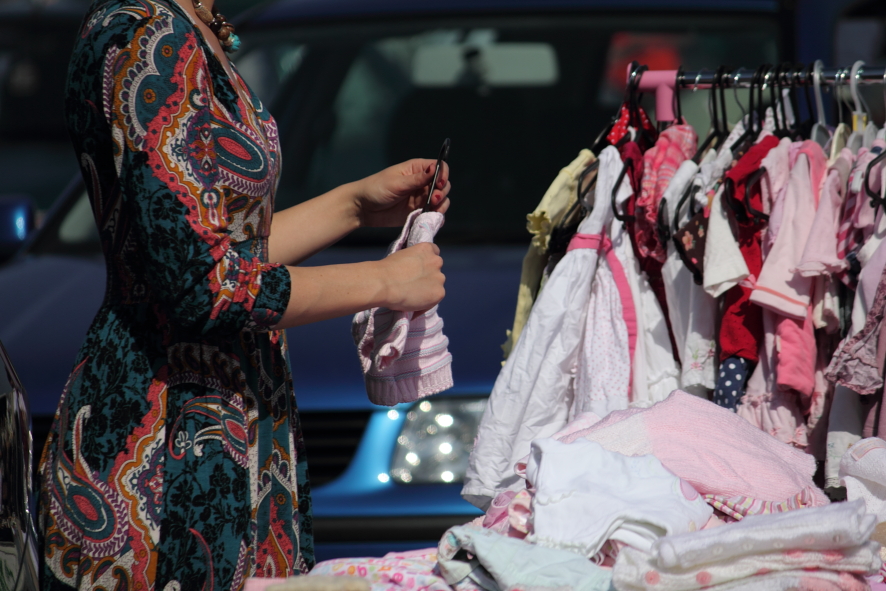
f5.6-1/2000-100-250mm
A stall seller prepares her baby clothes for sale
On reflection this was a great exercise. At first I was putting this off as the interaction with other people and taking photos without permission is some what daunting. However, once I got started, moving around, viewing, watching and waiting for that right moment was very addictive and enjoyable.
A few people asked what I was doing, and once I explained they were all very happy and welcoming.
Capturing peoples expressions unaware of the camera has helped create a series of photographs that accurately recreate the 'Car Boot' life.
Showing posts with label Exercise A1. Show all posts
Sunday, 10 April 2011
Sunday, 3 April 2011
Vertical and Horizontal Frames
When taking photographs many people forget that you can and should look for opportunities to shoot in both landscape and portrait. There are certain situations where portrait photography could alter the structure of the photograph and as such many photo opportunities may be over looked.
This next exercise illustrates this process.
Shooting here the scene tends to work best in landscape mode, which is usually more appeals to the human eye.
The horizon here plays a big part and illustrates that again shooting in landscape is more appealing.
With the addition of detail below the horizon in the mud flaps and re-positioning the horizon line to the top of the frame the portrait photograph has surpassed the original in this instance.
Landscape photo is more appealing, as the main focus of the photo is the reeds on the edge of the lake.
The expanses of the flowers and position of the horizon line makes the landscape photograph more appealing.
The landscape photo here is fairly compact, gives nice details towards the edge of the photo, whereas the portrait photo allows more details on the foreground and the tree in back is now completely visible. In this instance I prefer the portrait photo.
The additional detail of the tree in the portrait photo makes this more appealing. On reflection the photo could have been taken higher so that the flowers appear at the base of the tree and photo.
Where the landscape photo shows more of the fountain the portrait allows us to see that the mouth of the gargoyle statue is part of the complete fountain.
Here the portrait photo allows us to see the entire statue where as the landscape does not blend itself well to the frame.
The nature of this subject being vertical automatically blends itself to the portrait frame.
This next exercise illustrates this process.
| f/9-1/160-100-17mm |
| f/9-1/160-100-17mm |
| f14-1/125-100-17mm |
| f/14-1/80-100-17mm |
| f/14-1/400-800-250mm |
| f/14-1/400-500-250mm |
| f/16-1/40-250-17mm |
| f/16-1/30-250-19mm |
| f/22-1/30-320-17mm |
| f/22-1/30-250-17mm |
| f/4-1/320-100-55mm |
| f/4-1/400-100-55mm |
| f/4-1/320-100-55mm |
| f/4-1/250-100-55mm |
| f/4-1/200-100-17mm |
| f/4-1/320-100-17mm |
| f/4-1/640-100-17mm |
| f/4-1/640-100-17mm |
| f/4-1/320-100-40mm |
| f/4-1/320-100-40mm |
Saturday, 2 April 2011
Objects in Different Positions in the Frame
Composing an image should be a thoughtful process.
In order to understand the different areas of the frame and where to position your subject, this exercise is designed so that you choose a single subject and must show it in different positions while carefully thinking if the photographs works, why id does or doesn't and which appeals most.
Reposition the Sun-dial within the frame in the above photos I feel tends to work better for the Upper Left and Upper Right. With in inclusion of the white flowers and contrasting greens faded in the background these two appeal to me more. The Lower Left and Right photos, I feel have lost to much detail of the sun-dial and the photos have become unbalanced in such a way that they do not look good.
The Centred photo lacks composition and appeal.
In order to understand the different areas of the frame and where to position your subject, this exercise is designed so that you choose a single subject and must show it in different positions while carefully thinking if the photographs works, why id does or doesn't and which appeals most.
| f/5.0-1/400-100-135mm (Centred) |
| f/5.0-1/400-100-135mm (Lower Left) |
| f/5.0-1/400-100-135mm (Lower Right) |
| f/5.0-1/400-100-135mm (Upper Left) |
| f/5.0-1/400-100-135mm (Upper Right) |
The Centred photo lacks composition and appeal.
Focal Length with Different View Points
This exercise is to demonstrate the affects of changing the focal length on specific subject.
Using a zoom lens at 250mm focal length the image shows the women resting by the base of tree, both the tree and women fill the frame.
Changing focal length to 17mm and composing the image so that the women is positioned the same in each frame, meant I had to move closer to the subject. the resulting image shows a much wider view of the subject and the surrounding and bring the entire scene in to the frame.
| f/22-1/100-3200-250mm |
| f/22-1/30-1000-17mm |
Friday, 1 April 2011
Positioning the Horizon
Manipulating the position of the horizon was the aim of this exercise.
Position of the Horizon towards the top, shows good detail in the mud flaps, the sun setting in the background adds to the composition of the photograph.
Horizon position slightly lower than above, the detail is lost in the bottom of the photo now which has perhaps lost some of the contrast across the image.
Horizon now mid way, the photo appears bland, the actual position of the horizon and detail within the photo do not blend well together.
The sky is more prominent in the photo above, the detail of the mud flaps, and curves draw your attention to the front of the photo where sun and clouds offer another attractive point of view.
With the horizon positioned along the bottom of the frame, the focus of the photo now becomes vast expanse of sky. The sun setting in the bottom left helps draw your attention away from the nothingness.
The horizon is now just below the bottom of the photo, small details are slightly visible.
A combination of low and high horizon lines work well here.
Looking through the photos I feel that there's a relationship between the horizon line and details within the frame that help with composition and determining if the horizon affects the photograph and how it looks.
I note that as rule of thumb horizons tend not to be positioned centrally, however there are always exceptions to this rule ... depending on the subject, detail and meaning.
| f/14-1/60-400-40mm |
| f/14-1/60-320-40mm |
| f/14-1/60-320-40mm |
| f/14-1/60-200-40mm |
| f/14-1/60-125-40mm |
| f/14-1/80-125-40mm |
A combination of low and high horizon lines work well here.
Looking through the photos I feel that there's a relationship between the horizon line and details within the frame that help with composition and determining if the horizon affects the photograph and how it looks.
I note that as rule of thumb horizons tend not to be positioned centrally, however there are always exceptions to this rule ... depending on the subject, detail and meaning.
Subscribe to:
Posts (Atom)